
How Gap Won the 2025 Denim Wars
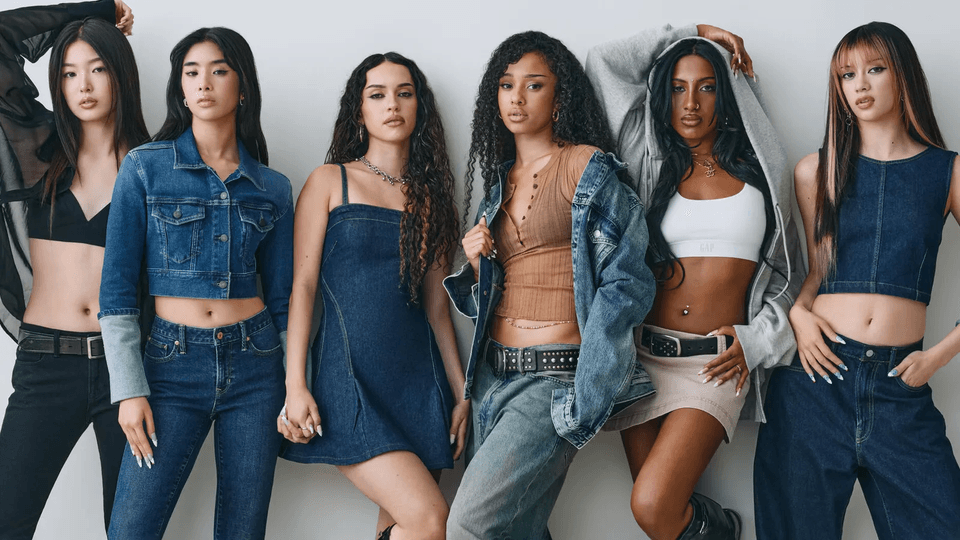
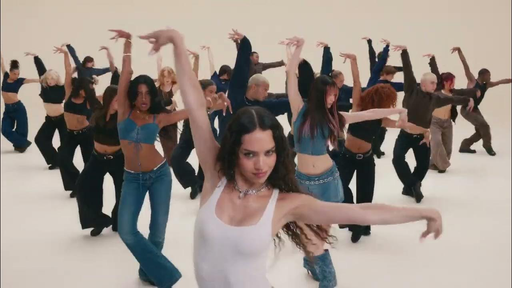
In August 2025, two of America's largest denim brands ran flagship celebrity campaigns within a month of each other. American Eagle launched first, with a Sydney Sweeney campaign that drew immediate cultural backlash. Gap followed shortly after with a high-energy dance video starring the K-pop group KATSEYE, set to the early-2000s hit "Milkshake."
The spot is worth watching before the breakdown — the format ends up doing a lot of the work:
By the end of the quarter, the contrast in financial impact was striking. American Eagle reported roughly $21.8M in incremental quarterly revenue. Gap reported roughly $54M, more than double the figure, and climbed to the #6 adult denim brand in the United States.
This post unpacks what my team's analysis suggests about why one campaign converted cultural heat into commercial momentum while the other did not. The work was completed for Professor R. Paul Singh's Marketing Strategies for Startups class at Northeastern University.
The campaign by the numbers
The performance metrics tell a clear story about reach and engagement:
- 171% increase in brand impressions
- 569% month-over-month engagement growth
- 4.7 million views in the first five days
- The most liked and shared TikTok in Gap's history
- Broken viewing records on Instagram
- Over 8 billion media impressions and 500 million+ views across platforms
- Gap brand Q3 net sales: $951 million, up 6% year-over-year
A note on attribution: the $54M revenue increase reflects Gap brand's entire quarterly performance, not an isolated measurement of campaign-driven sales. The campaign was a major contributor, but the figure should be read as "during the campaign window" rather than "caused entirely by the campaign."
Why it worked
Three factors compounded to drive the campaign's reach.
Timing. The Gap ad landed in a cultural moment where audiences were already debating denim advertising. The Sydney Sweeney controversy at American Eagle had primed the public conversation, and the Gap campaign read as a refreshing alternative. The ad did not need to manufacture attention. It walked into attention that already existed.
Format. The team chose a dance video, a format that KATSEYE is known for and that Gap had used effectively in prior campaigns. More importantly, the format was built for participation. Viewers could recreate the choreography, brands could produce parody versions, and TikTok's algorithm favors content that invites repetition. The campaign was not just a video. It was a template.
Talent. KATSEYE brought an existing fanbase that skews young, female, and highly online. Gap did not need to introduce the group to its audience. The audience was already there, waiting for content to engage with. This is the leverage that culturally-rising acts offer at the right moment in their trajectory: their fans operate as a built-in distribution layer.
The tradeoffs we flagged
A campaign this large always involves compromises, and three are worth naming honestly.
Reliance on existing fandom. The campaign performed best with audiences who already knew KATSEYE. It activated an existing community more than it converted new ones. For a brand actively trying to skew younger, that is a meaningful constraint on the long-term audience expansion thesis.
Talent overshadowed product. Across social media, much of the conversation centered on KATSEYE rather than on Gap or the denim itself. Viewers may remember the moment without remembering the brand behind it. This is a recurring risk in celebrity-led campaigns and one Gap will need to address in follow-up work.
Trend dependency. Cultural moments expire. The dance is fresh today, dated within a year, and a footnote within two. The campaign's impact may not compound the way that a more product-anchored creative platform might.
The unconventional call to action
The most interesting strategic choice in the campaign is what Gap did not do.
A traditional CTA would direct viewers to a product page, a sale, or a specific item. Gap's primary CTA was effectively to participate in the trend, to dance, to share, to be part of the moment. The secondary CTA, purchasing limited-edition KATSEYE-themed product, was deliberately downplayed.
This is a brand-building bet rather than a conversion-first bet. It assumes that long-term equity from a "cultural takeover," in CEO Richard Dickson's words, will outperform short-term revenue from a transactional ask. The Q3 numbers suggest the bet paid off, at least for now. But it is worth noting that this approach only works for brands at Gap's scale, with the wholesale distribution and store footprint to convert ambient brand affinity into eventual sales. A startup with no existing distribution would have very different math on this same tradeoff.
"We're driving digital dialogue messages, with social media as the No. 1 platform for our consumers. Influencer content is among the most common product discovery methods amongst Gen Z and millennials, which we've been performing incredibly well with."
Richard Dickson, CEO of Gap Inc.
The takeaway
The Gap × KATSEYE campaign succeeded because it understood three things at once: the cultural moment it was entering, the format that moment rewarded, and the audience that was already primed to engage. American Eagle's campaign, by contrast, generated attention but lost control of the narrative around it.
The broader lesson is one I want to carry into future marketing work: virality is not the goal. Relevance to a cultural conversation that already exists is the goal. The brands that win are the ones who recognize the moment, pick a format built for participation, and resist the urge to over-script the call to action. Cultural momentum, when captured well, monetizes itself.
This analysis was completed as part of ENTR 2303, Marketing Strategies for Startups, at Northeastern University's D'Amore-McKim School of Business. Co-analyzed with Lissandra Ferrante, Sarya Farouk Mirghani, and Avinash Vinod.
Sources: Marketing Dive, Gap Inc. Q3 earnings disclosures, PESTEL Analysis target market data.
Comments
Loading comments…